英単語(英英)の用語と解説
英語の説明から単語を当てる。865 語のうち 651〜700 語目です。答えを隠して、問いから答えを思い出してから読むと、覚えやすくなります。
この問題集をタイピングで解く
snow
問いSoft white flakes that fall from the sky in winter. Children make balls of it.

雪
【解説】雪だるまは snowman、雪合戦は snowball fight と言います。
【例文】We had snow last night.(昨夜は雪が降りました。)
snowy
問いWhite and cold everywhere, with soft white flakes falling from the sky.

雪の
【解説】名詞の snow に y を付けた形です。
【例文】We had a snowy Christmas.(私たちは雪のクリスマスを過ごしました。)
soap
問いA thing you rub on your hands with water to make them clean. It makes bubbles.

せっけん
【解説】数えられない名詞で、一個は a bar of soap と言います。
【例文】Wash your hands with soap.(せっけんで手を洗いなさい。)
soccer
問いA game with eleven players on each side. You kick a ball into a goal and cannot use your hands.
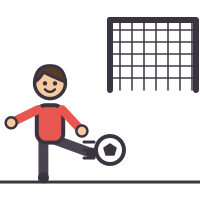
サッカー
【解説】イギリスでは football と言います。
【例文】I play soccer after school.(私は放課後にサッカーをします。)
sock
問いA soft piece of clothing for your foot. You wear it inside your shoe.

靴下
【解説】ふつう複数形の socks で使い、一足は a pair of socks と言います。
【例文】I need new socks.(新しい靴下が必要です。)
sofa
問いA long soft seat for two or three people. Families sit on it to watch TV.

ソファ
【解説】アメリカでは couch とも言います。
【例文】My cat is sleeping on the sofa.(私の猫はソファで寝ています。)
soft
問いNot hard. A pillow, a cat's fur, and fresh bread feel this way.
やわらかい
【解説】反対は hard です。穏やかで小さな声も soft voice と言います。
【例文】This bed is very soft.(このベッドはとてもやわらかいです。)
soldier
問いA person who is in the army and fights in a war. He or she wears a uniform.

兵士
【解説】発音は「ソウルジャー」です。
【例文】The soldiers marched through the town.(兵士たちは町を行進しました。)
song
問いMusic with words that you sing. You hear it on the radio and at concerts.
歌
【解説】名詞の song(歌)と、動詞の sing(歌う)を区別しておきましょう。
【例文】This is my favorite song.(これは私の大好きな歌です。)
soup
問いA hot liquid food that you eat with a spoon. It is often made with vegetables.

スープ
【解説】スープを飲むことは eat soup とも drink soup とも言えます。
【例文】This soup is hot.(このスープは熱いです。)
sour
問いTasting like a lemon. Your face goes funny when you eat something like this.

すっぱい
【解説】甘いは sweet、苦いは bitter と言います。
【例文】This orange is sour.(このオレンジはすっぱいです。)
souvenir
問いA small thing you buy on a trip to remember the place, like a key ring or a cup.
おみやげ
【解説】フランス語から来た語で、発音は「スーヴェニア」です。
【例文】I bought a souvenir for my mother.(私は母におみやげを買いました。)
space
問いThe dark place far above the sky where the stars and planets are. Rockets go there.

宇宙
【解説】「すき間・場所」の意味もあり、parking space は「駐車スペース」です。
【例文】The rocket flew into space.(ロケットは宇宙へ飛んでいきました。)
speak
問いTo use your voice to say words, or to be able to use a language like English.
話す
【解説】過去形は spoke です。speak English のように言語の名前と一緒によく使います。
【例文】Can you speak English?(英語を話せますか?)
special
問いNot like the others, and better or more important. A birthday is this day for you.
特別な
【解説】飲食店の「本日のおすすめ」は today's special と言います。
【例文】Today is a special day for me.(今日は私にとって特別な日です。)
speech
問いA talk that one person gives to many people, like at a school meeting.
演説・スピーチ
【解説】「スピーチをする」は make a speech と言います。
【例文】She made a speech in English.(彼女は英語でスピーチをしました。)
spend
問いTo use money to buy things, or to use time doing something.
(お金・時間を)使う
【解説】過去形は spent です。「~して時間を過ごす」は spend time doing です。
【例文】I spend too much money on games.(私はゲームにお金を使いすぎます。)
spicy
問いHot in your mouth, like curry or red pepper. Not hot from the stove.

辛い
【解説】hot も「辛い」の意味で使います。
【例文】I like spicy food.(私は辛い食べ物が好きです。)
spider
問いA small animal with eight legs. It makes a web to catch flies.
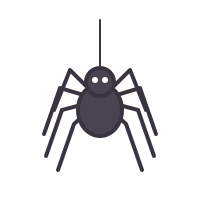
クモ
【解説】クモの巣は spider web(spiderweb)と言います。
【例文】There is a spider on the wall.(壁にクモがいます。)
sponge
問いA soft thing with many little holes that holds water. You wash dishes with it.
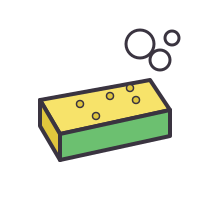
スポンジ
【解説】g は「ジ」の音で、「スポンジ」と読みます。
【例文】Wash the dishes with a sponge.(スポンジで皿を洗いなさい。)
spoon
問いA small tool with a round end. You use it to eat soup or ice cream.

スプーン
【解説】大さじは tablespoon、小さじは teaspoon と言います。
【例文】Eat your soup with a spoon.(スプーンでスープを食べなさい。)
sport
問いRunning, swimming, soccer, and tennis are all this. You need a strong body for it.

スポーツ
【解説】アメリカでは sports と s を付けて言うことが多くあります。
【例文】What sport do you like?(どんなスポーツが好きですか?)
spring
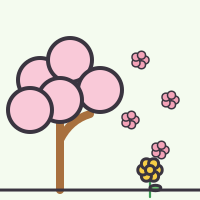
問いThe season after winter. Flowers open, it gets warm, and school starts in Japan.
春
【解説】「春に」は in spring です。動詞では「跳ねる」の意味もあります。
【例文】Spring is my favorite season.(春は私の一番好きな季節です。)
square
問いHaving four sides of the same length and four corners like a window or box.

正方形の・四角い
【解説】名詞では「正方形」のほか「広場」の意味にもなります。
【例文】We sat at a small square table.(私たちは小さな四角いテーブルに座りました。)
stadium
問いA very big place with thousands of seats around a field for watching soccer or baseball.

スタジアム・競技場
【解説】アクセントは前の sta にあり、「ステイディアム」と読みます。
【例文】The stadium was full of fans.(スタジアムはファンでいっぱいでした。)
stairs
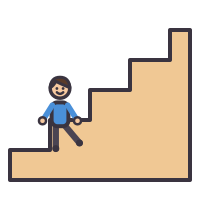
問いSteps that go up from one floor to another. You climb them in a house or a station.
階段
【解説】ふつう複数形で使います。「階段を上る」は go up the stairs です。
【例文】Go up the stairs and turn right.(階段を上がって右に曲がってください。)
stamp
問いA small piece of paper that you stick on a letter before you send it.

切手
【解説】「切手を集める」は collect stamps です。動詞では「判を押す」です。
【例文】Put a stamp on the envelope.(封筒に切手をはってね。)
stand
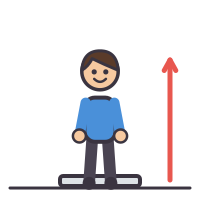
問いTo be on your feet with your body straight, not on a chair.
立つ
【解説】過去形は stood です。「立ち上がる」は stand up と言います。
【例文】Please stand up.(立ってください。)
star
問いA small bright point of light in the night sky. You see many of them on clear nights.

星
【解説】星形は star shape と言います。有名人のことも star と言います。
【例文】I can see many stars tonight.(今夜はたくさんの星が見えます。)
start
問いTo begin doing something, like a game or a lesson. The opposite of stop.
始める・始まる
【解説】begin とほぼ同じ意味です。「~し始める」は start to do / start doing です。
【例文】School starts at eight.(学校は8時に始まります。)
station
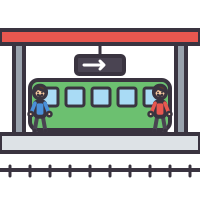
問いThe place where trains stop. People buy tickets and wait for their train there.
駅
【解説】消防署は fire station、警察署は police station と言います。
【例文】The station is near my house.(駅は私の家の近くにあります。)
stay
問いTo be in a place for some time and not go away, like at a hotel or at home.
とどまる・泊まる
【解説】「ホテルに泊まる」は stay at a hotel、「家にいる」は stay home です。
【例文】We stayed at my uncle's house.(私たちはおじの家に泊まりました。)
stomach
問いThe part inside your body where food goes after you eat. It hurts when you eat too much.
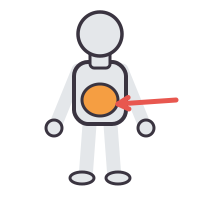
胃・おなか
【解説】ch は k の音で、「スタマック」と読みます。
【例文】My stomach hurts.(おなかが痛いです。)
stomachache
問いA pain in your belly. You may get it when you eat too much ice cream.
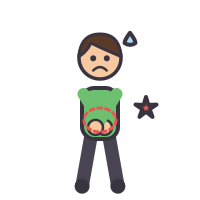
腹痛
【解説】stomach(胃・腹)と ache(痛み)を合わせた語で、stomach は「スタマック」と読みます。
【例文】He has a stomachache after lunch.(彼は昼食のあとおなかが痛いです。)
stone
問いA small hard piece of rock. You can find it on the ground or in a river.

石
【解説】大きな岩は rock、小石は pebble と言います。
【例文】He threw a stone into the river.(彼は川に石を投げました。)
stop
問いTo not move or do something anymore. A car does this at a red light.
止まる・やめる
【解説】過去形は p を重ねて stopped です。「~するのをやめる」は stop doing です。
【例文】Stop talking, please.(話すのをやめてください。)
storm
問いVery bad weather with strong wind, heavy rain, and loud noise from the sky.
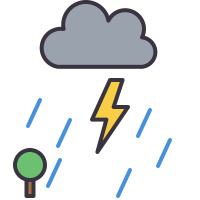
あらし
【解説】吹雪は snowstorm、雷雨は thunderstorm と言います。
【例文】A big storm hit the town.(大きなあらしが町を襲いました。)
stormy
問いWith very strong wind, heavy rain, and loud noise from the sky. Ships stay in port.
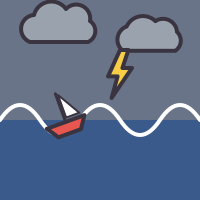
あらしの
【解説】名詞の storm に y を付けた形です。
【例文】It was a stormy night.(あらしの夜でした。)
straight
問いGoing in one direction without any bend or curve, like a line drawn with a ruler.
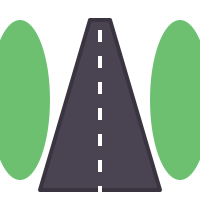
まっすぐな
【解説】副詞にもなり、Go straight ahead. で「まっすぐ進んでください」です。
【例文】Draw a straight line across the paper.(紙に一本まっすぐな線を引いてください。)
strange
問いNot usual and hard to understand, like a noise at night that you never heard before.
奇妙な
【解説】名詞の stranger は「見知らぬ人」です。
【例文】I heard a strange sound.(奇妙な音が聞こえました。)
strawberry
問いA small red fruit with tiny seeds on the outside. People put it on cake.

イチゴ
【解説】複数形は strawberries です。y を i に変えて es を付けます。
【例文】I like strawberry ice cream.(私はイチゴのアイスクリームが好きです。)
string
問いA thin line of cotton that you tie things with. A kite flies on one.
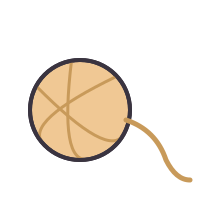
ひも・糸
【解説】ギターなどの弦も string と言います。
【例文】Tie the box with string.(箱をひもで結んで。)
strong
問いHaving a lot of power in your body. An elephant and a gorilla are this.

強い
【解説】反対は weak です。名詞の「力・強さ」は strength と言います。
【例文】He is very strong.(彼はとても力が強いです。)
student
問いA young person who goes to school to learn. This person has a teacher.

生徒・学生
【解説】小学生は elementary school student と言います。
【例文】I am a junior high school student.(私は中学生です。)
study
問いTo read books and learn about a subject, like math or history, for a test.
勉強する
【解説】三単現は studies、過去形は studied で、y が i に変わります。
【例文】I study English every day.(私は毎日英語を勉強します。)
subject
問いOne thing that you study at school, like math, science, or music.
教科・科目
【解説】「話題・主題」の意味もある単語です。
【例文】What is your favorite subject?(一番好きな教科は何ですか?)
subway
問いA train that runs under the ground in a big city.

地下鉄
【解説】アメリカ英語の言い方で、イギリスでは underground や tube と言います。
【例文】I go to work by subway.(私は地下鉄で通勤します。)
suddenly
問いVery fast and without any warning at all. The door opened like this and made us jump.
突然
【解説】形容詞は sudden(突然の)です。
【例文】Suddenly, the lights went out.(突然、明かりが消えました。)
sugar
問いSmall white grains that taste sweet. You put it in coffee or use it to make cake.

砂糖
【解説】s は sh の音で、「シュガー」と読みます。
【例文】Do you take sugar in your tea?(紅茶に砂糖を入れますか?)
suitcase
問いA big hard bag with a handle. You put your clothes in it when you go on a trip.

スーツケース
【解説】suit(服)を入れる case(箱)なので suitcase です。
【例文】Her suitcase is very heavy.(彼女のスーツケースはとても重いです。)