英単語(英英)の用語と解説
英語の説明から単語を当てる。865 語のうち 201〜250 語目です。答えを隠して、問いから答えを思い出してから読むと、覚えやすくなります。
この問題集をタイピングで解く
door
問いThe flat thing you open to go into a room or a house. It has a handle.

ドア・扉
【解説】open the door、close the door のように使います。
【例文】Please close the door.(ドアを閉めてください。)
draw
問いTo make a picture with a pencil or crayon, not with paint.

(線で)描く
【解説】ペンや鉛筆で線を引いて描くのが draw、絵の具で描くのは paint です。過去形は drew です。
【例文】I like to draw animals.(私は動物を描くのが好きです。)
drink
問いTo take water, milk, or juice into your mouth and swallow it.

飲む
【解説】過去形は drank です。名詞では「飲み物」の意味もあります。
【例文】I drink milk every day.(私は毎日牛乳を飲みます。)
drive
問いTo sit in a car and make it move along the road.
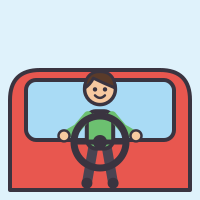
運転する
【解説】過去形は drove です。運転手は driver と言います。
【例文】My mother drives to work.(母は車で仕事に行きます。)
driver
問いA person whose job is to take people from place to place in a bus or a taxi.

運転手
【解説】drive に r を付けた形です。taxi driver のように前に乗り物を置きます。
【例文】The bus driver said hello.(バスの運転手がこんにちはと言いました。)
drop
問いTo let something fall from your hand by mistake, like a glass or a phone.
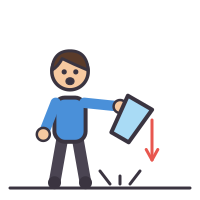
落とす
【解説】過去形は p を重ねて dropped です。
【例文】I dropped my phone on the floor.(私は電話を床に落としました。)
drum
問いA round instrument that you hit with two sticks to make a loud beat.
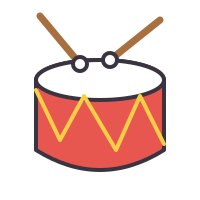
太鼓・ドラム
【解説】楽器のドラムセットとしては the drums と複数形で言うことが多くあります。
【例文】He plays the drums in a band.(彼はバンドでドラムをたたきます。)
dry
問いNot wet. A desert and a towel fresh from the sun are this.
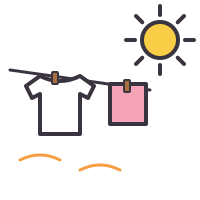
乾いた
【解説】動詞では「乾かす」の意味もあります。
【例文】The towel is dry now.(タオルはもう乾いています。)
duck
問いA bird that swims on ponds and says quack. It has a flat yellow bill.
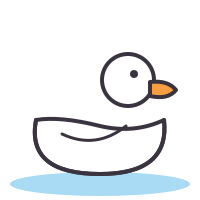
アヒル・カモ
【解説】鳴き声は quack、ひなは duckling と言います。
【例文】The duck swims in the pond.(アヒルが池で泳いでいます。)
dust
問いVery small dry dirt that sits on shelves and makes you sneeze when you wipe it.
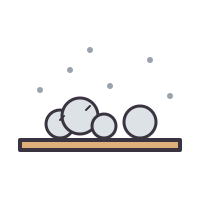
ほこり
【解説】数えられない名詞です。動詞では「ほこりを払う」の意味になります。
【例文】There is dust on the shelf.(棚にほこりがあります。)
ear
問いOne of the two parts on the sides of your head. You hear sounds with it.
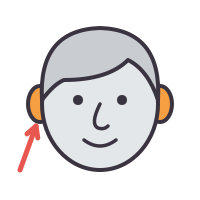
耳
【解説】母音の音で始まるので an ear と言います。「聞く」は hear や listen です。
【例文】Rabbits have long ears.(うさぎは耳が長いです。)
early
問いBefore the usual time. Getting up at five in the morning is this.

早い
【解説】副詞も同じ形です。反対は late です。
【例文】I get up early on Sundays.(私は日曜日は早く起きます。)
earth
問いThe planet where we all live. It goes around the sun and is mostly covered with water.

地球
【解説】「地球」の意味では the earth と the を付けます。「土・地面」の意味もあります。
【例文】The earth goes around the sun.(地球は太陽のまわりを回ります。)
earthquake
問いWhen the ground shakes hard and buildings move. Japan has many of them.
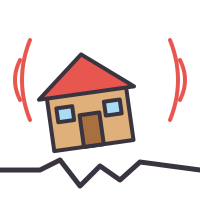
地震
【解説】earth(大地)と quake(揺れる)を合わせた 1 語です。
【例文】There was a big earthquake last night.(昨夜大きな地震がありました。)
easy
問いNot hard to do or understand. A test like this makes everyone smile.
簡単な
【解説】比較級は easier です。Take it easy. は「気楽にね」です。
【例文】This question is easy.(この問題は簡単です。)
eat
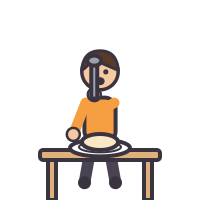
問いTo put food in your mouth, chew it, and swallow it.
食べる
【解説】過去形は ate、過去分詞は eaten です。
【例文】We eat lunch at noon.(私たちは正午に昼食を食べます。)
egg
問いA round white or brown food that comes from a chicken. It has a yellow center.

卵
【解説】母音の音で始まるので an egg と言います。ゆで卵は boiled egg です。
【例文】I want two eggs, please.(卵を2つください。)
elbow
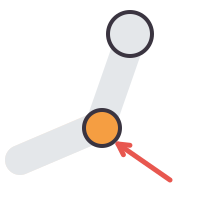
問いThe part in the middle of your arm where it bends. You rest it on the table.
ひじ
【解説】ひじは elbow、ひざは knee です。
【例文】Don't put your elbows on the table.(テーブルにひじをつかないで。)
elephant
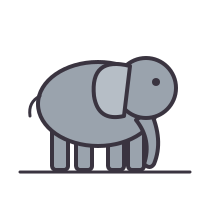
問いThe biggest animal on land. It has a long nose, big ears, and gray skin.
ゾウ
【解説】ゾウの長い鼻は trunk、牙は tusk と言います。
【例文】An elephant has a long nose.(ゾウは鼻が長いです。)
elevator
問いA small room that goes up and down in a tall building to carry people to other floors.
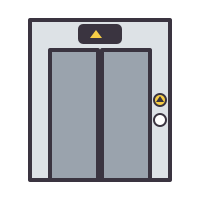
エレベーター
【解説】アメリカ英語の言い方で、イギリスでは lift と言います。
【例文】Take the elevator to the fifth floor.(エレベーターで5階へ行ってください。)
empty
問いWith nothing inside, like a box with no toys or a cup with no tea.
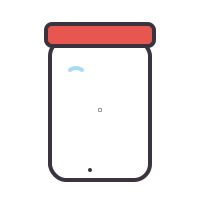
空の
【解説】反対は full です。母音の音で始まるので an empty box と言います。
【例文】The box is empty.(その箱は空です。)
engine
問いThe part of a car or plane that makes it move. It burns gas and makes noise.
エンジン
【解説】消防車は fire engine とも言います。
【例文】The car engine is very loud.(その車のエンジンはとてもうるさいです。)
enjoy
問いTo have a good time doing something, like a game, a party, or a trip.
楽しむ
【解説】「~して楽しむ」は enjoy doing で、to 不定詞は使いません。
【例文】I enjoyed the party.(私はパーティーを楽しみました。)
eraser
問いA small soft thing that takes pencil marks off paper when you rub it.

消しゴム
【解説】母音の音で始まるので an eraser と言います。動詞の erase は「消す」です。
【例文】Can I borrow your eraser?(消しゴムを借りてもいい?)
evening
問いThe part of the day after the sun goes down and before you go to bed.
夕方・晩
【解説】「夕方に」は in the evening、「今晩」は this evening です。
【例文】Good evening, everyone.(こんばんは、みなさん。)
example
問いOne thing that shows what a whole group is like. A teacher gives one to make a rule clear.
例
【解説】for example で「たとえば」です。
【例文】Can you give me an example?(例を挙げてもらえますか。)
excited
問いVery happy and full of energy because something fun is coming, like a trip.

わくわくした
【解説】人の気持ちは excited、わくわくさせる物事は exciting で表します。
【例文】I am excited about the trip.(私は旅行にわくわくしています。)
exercise
問いMoving your body to stay strong, like running or swimming. Doctors say you need it.

運動
【解説】「運動する」は do exercise / get exercise と言います。
【例文】I do exercise every morning.(私は毎朝運動をします。)
expensive
問いCosting a lot of money, like a car or a gold ring.

高い(値段が)
【解説】背が高いのは tall、値段が高いのは expensive と言い分けます。
【例文】This watch is too expensive.(この時計は高すぎます。)
explain
問いTo tell someone about something in a clear way so that they understand it.
説明する
【解説】名詞は explanation(説明)で、つづりの ai が a に変わります。
【例文】Please explain this word to me.(この単語を私に説明してください。)
explore
問いTo go around a new place to find out what is there. You do this in a cave.
探検する
【解説】探検する人は explorer です。
【例文】We explored the old castle.(私たちは古い城を探検しました。)
eye
問いOne of the two parts of your face that you see with. You close it when you sleep.

目
【解説】母音の音で始まるので an eye と言います。視力は eyesight です。
【例文】Close your eyes.(目を閉じて。)
face
問いThe front of your head. Your eyes, nose, and mouth are on it.

顔
【解説】笑顔は smile、「顔を洗う」は wash your face と言います。
【例文】Wash your face in the morning.(朝に顔を洗いなさい。)
factory
問いA big building where people and machines make things, like cars or chocolate.

工場
【解説】複数形は factories です。y を i に変えて es を付けます。
【例文】My father works at a car factory.(私の父は自動車工場で働いています。)
family
問いYour mother, father, brothers, and sisters together. They live in one house with you.
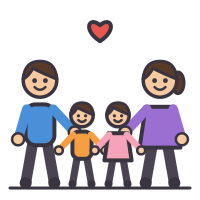
家族
【解説】複数形は families です。y を i に変えて es を付けます。
【例文】There are five people in my family.(私の家族は5人です。)
famous
問いKnown by many people all over the country or the world, like a movie star.

有名な
【解説】「~で有名だ」は famous for と言います。
【例文】Kyoto is famous for its temples.(京都は寺で有名です。)
far
問いA long way from here, not near. The moon is this from the earth.
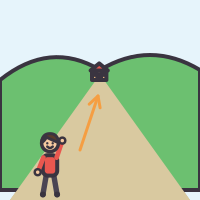
遠い
【解説】How far ...? で「どのくらい遠いか」を尋ねます。
【例文】The station is far from my house.(駅は私の家から遠いです。)
farm
問いA big piece of land where people grow rice and vegetables and keep cows.
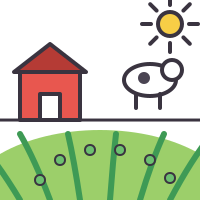
農場
【解説】「農場で」は on a farm と on を使います。
【例文】My grandfather has a farm.(私の祖父は農場を持っています。)
farmer
問いA person who grows rice and vegetables and keeps cows and chickens for a living.

農家の人
【解説】farm(農場)に er を付けると「農場で働く人」になります。
【例文】The farmer gets up very early.(農家の人はとても早く起きます。)
fast
問いMoving with great speed, like a rabbit or a race car.
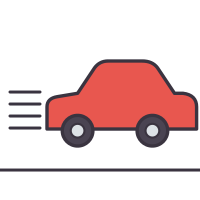
速い
【解説】副詞も同じ形で、run fast のように使います。
【例文】This train is very fast.(この電車はとても速いです。)
father
問いA man who has a child. He is a parent, and children call him dad.
父
【解説】家庭では dad や daddy と呼びます。
【例文】My father works in Tokyo.(私の父は東京で働いています。)
fear
問いThe feeling you get when you are afraid. Your heart beats fast and you want to run.
恐れ
【解説】動詞でも使い、I fear ... で「~を恐れる」です。
【例文】She has a fear of high places.(彼女は高い所が怖いです。)
feather
問いOne of the soft light things that cover a bird. They help it fly.
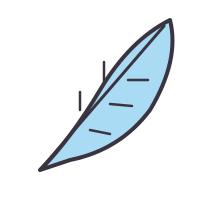
羽
【解説】羽 1 枚 1 枚が feather、鳥の翼は wing です。
【例文】I found a white feather on the ground.(私は地面に白い羽を見つけました。)
feed
問いTo give food to an animal or a baby that cannot eat by itself.
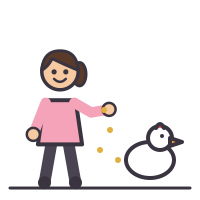
えさをやる
【解説】過去形は fed です。名詞の food と同じ系統の語です。
【例文】I feed my dog twice a day.(私は犬に1日2回えさをやります。)
festival
問いA big happy event in a town with music, food, and dancing, held once a year.
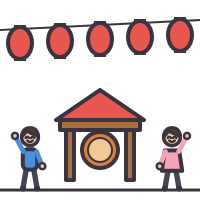
祭り
【解説】学校祭は school festival、花火大会は fireworks festival と言います。
【例文】There is a summer festival tonight.(今夜は夏祭りがあります。)
fever
問いWhen your body is hotter than usual because you are sick. You feel hot and weak.

熱
【解説】「熱がある」は have a fever と言います。
【例文】I have a fever today.(私は今日熱があります。)
field
問いA wide flat piece of land with no trees, where grass or rice grows. Cows may eat there.
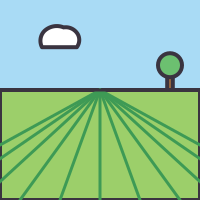
野原・畑
【解説】野原・畑のほか、競技場の意味もあり、野球場は baseball field と言います。
【例文】The cows are in the field.(牛たちは野原にいます。)
fill
問いTo put things into a box or a cup until there is no space left.
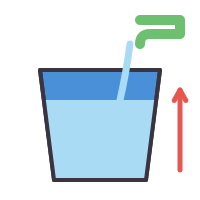
満たす
【解説】「~でいっぱいにする」は fill with、「記入する」は fill in です。
【例文】Fill the bottle with water.(ボトルに水をいっぱい入れてね。)
finally
問いAfter a long wait, at the end. The bus came like this after one hour.
ついに
【解説】at last もほぼ同じ意味で使えます。
【例文】We finally arrived at the hotel.(私たちはついにホテルに着きました。)
find
問いTo see or get something that you were looking for, like a lost key.
見つける
【解説】過去形は found です。「探す」は look for と言います。
【例文】I found my key under the bed.(ベッドの下でかぎを見つけました。)