英単語(英英)の用語と解説
英語の説明から単語を当てる。865 語のうち 751〜800 語目です。答えを隠して、問いから答えを思い出してから読むと、覚えやすくなります。
この問題集をタイピングで解く
tooth
問いOne of the hard white things in your mouth. You bite and chew food with it.
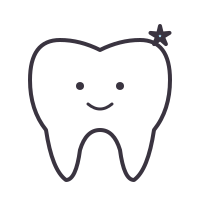
歯
【解説】複数形は teeth です。歯磨きは brush your teeth と言います。
【例文】I have a bad tooth.(私は虫歯があります。)
toothbrush
問いA small tool with a handle and many tiny hairs. You clean your teeth with it every morning.
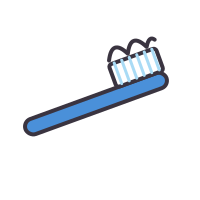
歯ブラシ
【解説】tooth(歯)と brush を合わせた語です。歯磨き粉は toothpaste です。
【例文】I need a new toothbrush.(新しい歯ブラシが必要です。)
touch
問いTo put your hand or finger on something so that you can feel it.
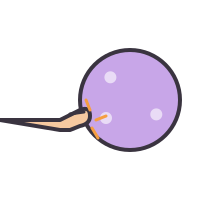
触る
【解説】三人称単数は touches です。
【例文】Don't touch the hot pan.(熱いフライパンに触らないで。)
tour
問いA visit to many famous places in one day, often by bus with a person who explains them.
ツアー・見学
【解説】案内する人は tour guide、観光客は tourist です。
【例文】We joined a bus tour of the city.(私たちは市内のバスツアーに参加しました。)
tourist
問いA person who visits a place for fun. He or she takes photos and buys souvenirs.
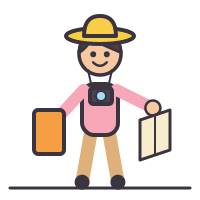
観光客
【解説】tour(旅行)をする人なので tourist です。
【例文】Many tourists visit Kyoto in spring.(春には多くの観光客が京都を訪れます。)
towel
問いA soft cloth that you use to dry your hands, face, or body after a bath.
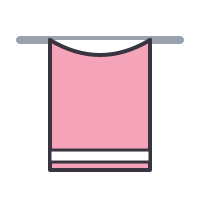
タオル
【解説】浴用の大きなタオルは bath towel と言います。
【例文】Dry your hair with a towel.(タオルで髪をふきなさい。)
tower
問いA very tall thin building that you can go up to see the whole city.
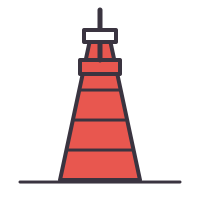
塔・タワー
【解説】時計塔は clock tower と言います。
【例文】Tokyo Tower is red and white.(東京タワーは赤と白です。)
town
問いA place with houses, shops, and streets, bigger than a village but smaller than a city.
町
【解説】町の中心部は downtown、市役所は city hall と言います。
【例文】I live in a small town.(私は小さな町に住んでいます。)
toy
問いA thing that children play with, like a small car, a ball, or a doll.
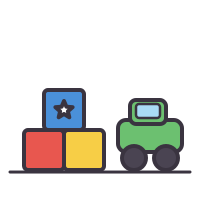
おもちゃ
【解説】おもちゃ屋は toy shop と言います。
【例文】The baby is playing with a toy.(赤ちゃんがおもちゃで遊んでいます。)
traffic lighttraffic light|traffic lights|traffic signal|traffic signals
問いThe red, yellow, and green signals on a street corner that tell cars when to stop or go.
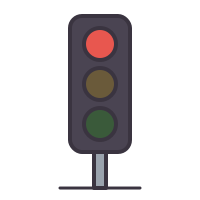
信号機
【解説】traffic signal とも言います。traffic は「交通」で、traffic jam は「渋滞」です。
【例文】Stop at the traffic light.(信号で止まりなさい。)
train
問いA long line of cars on rails. It carries many people between stations.
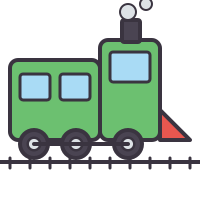
電車
【解説】「電車に乗る」は take the train、駅は station と言います。
【例文】I take the train to work.(私は電車で仕事に行きます。)
trash
問いThings that you throw away, like empty bottles and old paper.

ごみ
【解説】garbage とほぼ同じ意味です。ごみ箱は trash can と言います。
【例文】Take out the trash, please.(ごみを出してください。)
travel
問いTo go to a far place, like another city or country, for fun or for work.
旅行する
【解説】名詞では「旅行」の意味です。一回の旅行は trip と言います。
【例文】I want to travel around the world.(私は世界中を旅行したいです。)
tray
問いA flat piece of plastic or metal with low sides, used to carry food and cups.

お盆・トレー
【解説】発音は「トレイ」で、複数形は trays です。
【例文】She carried the tray to our table.(彼女はお盆を私たちのテーブルまで運びました。)
tree
問いA tall plant with a thick wooden trunk, branches, and many leaves.
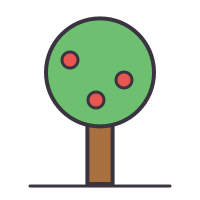
木
【解説】木材は wood、森は forest と言います。
【例文】There is a big tree in the park.(公園に大きな木があります。)
trip
問いA short visit to a place for fun or work. You go there and then come home.
旅行
【解説】take a trip / go on a trip で「旅行に行く」です。
【例文】We took a trip to Kyoto.(私たちは京都へ旅行に行きました。)
truck
問いA big strong car with an open back for carrying heavy things like boxes.
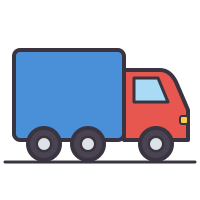
トラック
【解説】アメリカ英語の言い方で、イギリスでは lorry と言います。
【例文】The truck is full of apples.(そのトラックはリンゴでいっぱいです。)
try
問いTo make an effort to do something, even if it is hard. You may not do it well.
やってみる
【解説】過去形は tried です。「~しようとする」は try to do と言います。
【例文】Try this cake.(このケーキを食べてみて。)
Tuesdaytuesday
問いThe second school day of the week. It comes after Monday and before Wednesday.
火曜日
【解説】Tues は「二番目」ではなく、昔の神の名前が元になっています。
【例文】We have music class on Tuesday.(火曜日には音楽の授業があります。)
tunnel
問いA long hole through a mountain or under the ground for cars and trains.
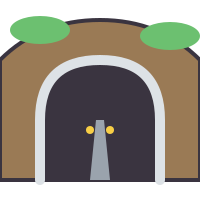
トンネル
【解説】「トンネルを通る」は go through a tunnel と言います。
【例文】The train went through a long tunnel.(電車は長いトンネルを通りました。)
turn
問いTo change the way you are facing, like going left or right at a corner.
曲がる・回す
【解説】「電気をつける」は turn on、「消す」は turn off です。
【例文】Turn right at the bank.(銀行のところで右に曲がってください。)
turtle
問いA slow animal with a hard shell on its back. It can pull its head inside.
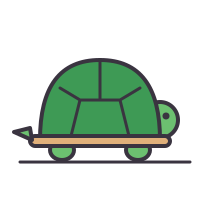
カメ
【解説】ウミガメは sea turtle と言います。
【例文】The turtle walks very slowly.(カメはとてもゆっくり歩きます。)
typhoon
問いA very big storm with very strong wind and rain. It comes to Japan in late summer.
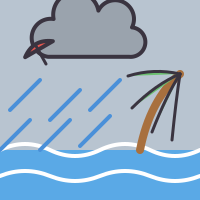
台風
【解説】大西洋などで発生する同じ種類の嵐は hurricane と呼ばれます。
【例文】A typhoon is coming this weekend.(今週末に台風が来ます。)
umbrella
問いA thing that you open and hold over your head to keep the rain off.

かさ
【解説】母音の音で始まるので、an umbrella と言います。
【例文】Take your umbrella with you.(かさを持っていきなさい。)
uncle
問いThe brother of your mother or your father. He is a man, and his wife is your aunt.
おじ
【解説】母音の音で始まるので、an uncle と言います。
【例文】My uncle gave me a bike.(おじが私に自転車をくれました。)
uniform
問いThe same clothes that all the students of a school wear every day.
制服
【解説】つづりは母音字で始まりますが、発音が「ユ」なので a uniform と言います。
【例文】We wear a uniform at school.(私たちは学校で制服を着ます。)
use
問いTo do something with a tool or a thing, like a pen for writing.
使う
【解説】動詞は「ユーズ」、名詞の use(使用)は「ユース」と読みます。
【例文】Can I use your phone?(あなたの電話を使ってもいい?)
useful
問いHelpful. A thing that does a good job for you, like a map when you are lost, is this.
役に立つ
【解説】use に ful を付けた形です。反対は useless です。
【例文】This map is very useful.(この地図はとても役に立ちます。)
usually
問いMost of the time, but not always. You get up at seven like this on school days.
たいてい
【解説】頻度の副詞なので、be 動詞の後、一般動詞の前に置きます。
【例文】I usually walk to school.(私はたいてい歩いて学校へ行きます。)
vacation
問いThe days when you do not work or study. Many families go to the beach then.
休暇
【解説】主にアメリカ英語で、イギリスでは holiday と言うことが多い語です。
【例文】Where did you go on your summer vacation?(夏休みにどこへ行きましたか。)
vacuum cleaner
問いA machine that pulls up dust from the floor with a loud noise. You push it around the room.
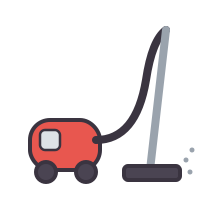
そうじ機
【解説】「掃除機をかける」は vacuum の一語でも表せます。
【例文】Use the vacuum cleaner in the living room.(居間でそうじ機をかけてね。)
valley
問いThe low land between two mountains or hills. A river often runs through it.
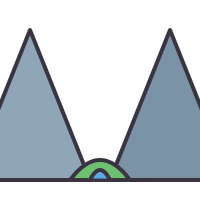
谷
【解説】母音字+y で終わるので、複数形は y を変えずに valleys です。
【例文】A small village lies in the valley.(谷に小さな村があります。)
video
問いMoving pictures with sound that you record with a phone and share with friends online.

動画・ビデオ
【解説】「動画を撮る」は take a video、複数形は videos です。
【例文】I made a video of my cat.(私は猫の動画を作りました。)
village
問いA very small town in the country with few houses and a lot of fields.
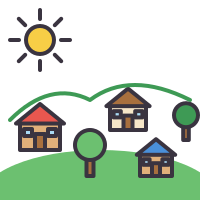
村
【解説】大きい順に city(市)、town(町)、village(村)です。
【例文】My grandmother lives in a village.(私の祖母は村に住んでいます。)
violin
問いA small wooden instrument with four strings. You hold it under your chin and play it with a bow.
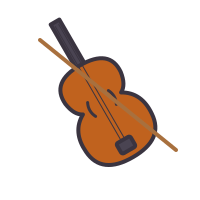
バイオリン
【解説】アクセントは最後の lin にあります。楽器を弾くときは the を付けます。
【例文】She plays the violin very well.(彼女はバイオリンをとても上手に弾きます。)
visit
問いTo go to see a place or a person and stay there for a while.
訪れる
【解説】visit の後にはすぐ場所や人を置き、to は付けません。
【例文】We visited Kyoto last week.(私たちは先週京都を訪れました。)
volcano
問いA mountain with a hole at the top. Hot red rock and smoke come out of it.
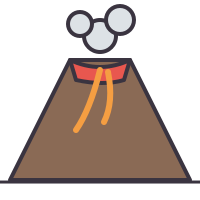
火山
【解説】複数形は volcanoes です(volcanos とつづることもあります)。
【例文】Mt. Fuji is a volcano.(富士山は火山です。)
volleyball
問いA game where two teams hit a ball over a high net with their hands and arms.
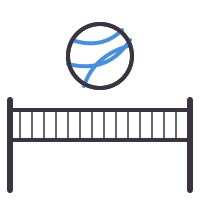
バレーボール
【解説】日本語の「バレー」は volley から来ており、ballet(バレエ)とは別の語です。
【例文】We played volleyball on the beach.(私たちは海岸でバレーボールをしました。)
wait
問いTo stay in a place until a person comes or something happens.
待つ
【解説】wait for ~ で「~を待つ」です。
【例文】Wait for me at the station.(駅で私を待っていて。)
waiter
問いA man who brings food and drinks to your table in a restaurant.
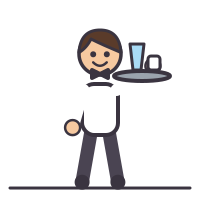
ウェイター
【解説】女性形は waitress です。男女どちらにも使える server も覚えておきましょう。
【例文】The waiter brought our pizza.(ウェイターが私たちのピザを持ってきました。)
wake
問いTo stop sleeping and open your eyes. An alarm clock helps you do this.
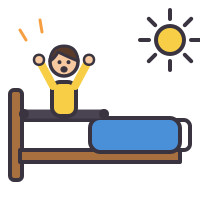
目が覚める
【解説】wake up で「目を覚ます」です。過去形は woke です。
【例文】I wake up at six.(私は6時に目が覚めます。)
walk
問いTo move on your feet at a slow, easy speed. It is slower than a run.
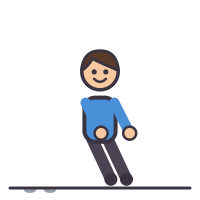
歩く
【解説】「散歩する」は take a walk と言います。
【例文】I walk to school every day.(私は毎日歩いて学校へ行きます。)
wall
問いThe tall flat side of a room or building. You hang pictures on it.
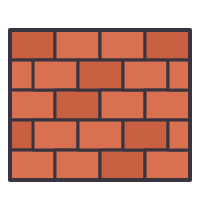
壁
【解説】「壁に(掛かって)」は on the wall と言います。
【例文】There is a clock on the wall.(壁に時計があります。)
wallet
問いA small flat case for your money and cards. You keep it in your pocket or bag.
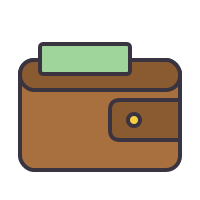
財布
【解説】特にイギリスでは、女性用の財布を purse と言います。
【例文】I left my wallet at home.(私は財布を家に置いてきました。)
want
問いTo wish to have something or to do something, like a new game or a trip.
ほしい・〜したい
【解説】「~したい」は want to + 動詞の原形 で表します。
【例文】I want a new bike.(私は新しい自転車がほしいです。)
war
問いFighting between countries with armies and guns. Many people die in it.
戦争
【解説】反対は peace(平和)です。
【例文】The war ended in 1945.(その戦争は1945年に終わりました。)
warm
問いA little hot, in a nice way, like a spring day or a soft blanket.
暖かい
【解説】反対は cool です。比較級は warmer です。
【例文】It is warm today.(今日は暖かいです。)
wash
問いTo clean something with water and soap, like your hands or your clothes.
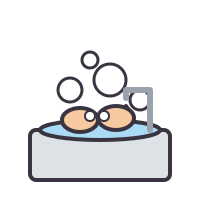
洗う
【解説】三人称単数は washes です。洗濯機は washing machine と言います。
【例文】Wash your hands before dinner.(夕食の前に手を洗いなさい。)
watch
問いTo look at TV, a movie, or a game for a long time with your eyes.
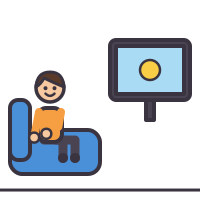
(じっと)見る
【解説】動くものを注意して見るときに使い、テレビは watch TV と言います。
【例文】I watch TV after dinner.(私は夕食後にテレビを見ます。)
water
問いA clear liquid with no color or taste. We drink it, and fish live in it.
水
【解説】数えられない名詞で、一杯は a glass of water と言います。
【例文】Please give me some water.(水をください。)